
- News
- etimes
- animals-pets
- Copperhead vs Water snake: 6 easy ways to tell the difference quickly
Copperhead vs Water snake: 6 easy ways to tell the difference quickly
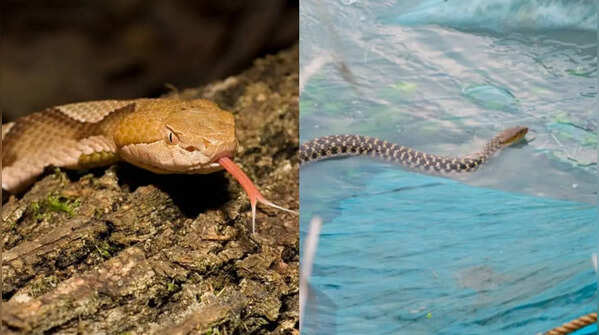
Copperhead vs Water snake: 6 easy ways to tell the difference quickly
Spotting a snake by a pond, stream, or even your backyard may seem scary. Often people mistake harmless water snakes with venomous copperheads as both animals have brown or reddish patterns. This may cause people to react poorly to the presence of water snakes that may harm them. It is important to know how to recognize these two types of snakes in order not to cause them any harm or become a victim yourself. Here are six signs that can help you to differentiate these snakes easily.
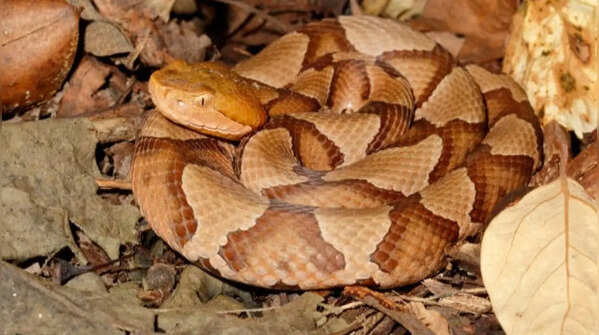
Check the body pattern of a snake
The first and easiest way to tell a snake is to look carefully at its body pattern. As far as copperheads are concerned, they have hourglass-shaped bands. The bands are narrow across the back of the snake and wide on the sides, making this snake look like an hourglass from above. The most common water snakes have blotches, crossbands or alternating dark spots that do not create the hourglass-like pattern. Although the color may differ depending on individual snakes, their pattern is the main criterion.

Pay attention to the head of the snake
One of the unique features of copperheads is their wide heads. Their heads are triangular and much wider than their bodies. This type of head is usual for most pit vipers. Water snakes can flatten and enlarge their heads in case of danger trying to make them appear triangular. Therefore, you cannot use only the head of the snake as a sign since it will give you wrong information.

Compare eyes of the snakes—Only from the distance
It is another common sign that helps to differentiate copperheads from water snakes. The pupils of copperheads are vertical and are shaped like cats' pupils. Water snakes have round pupils. However, you cannot get close to the wild snake and observe its pupils since this way of identification may put you in danger. Experts advise to observe snakes from a distance.

Consider behavior of the animal
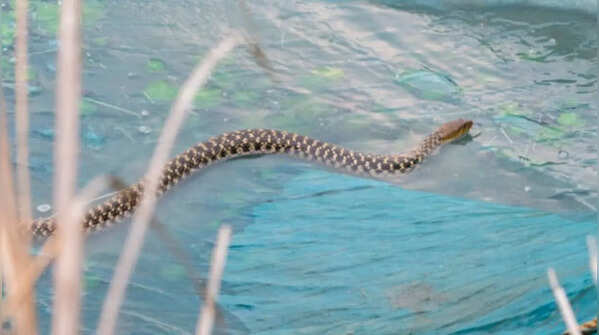
Sometimes behavior of snakes may indicate the type of the animal. Copperheads usually use the technique of camouflaging. They stay motionless in case of danger to make themselves not noticed. Water snakes are quite active when they live in rivers, lakes, ponds, and other water habitats. If water snakes are disturbed, they swim away or hide under water. Thus, behavior may indicate what type of animal you are facing.
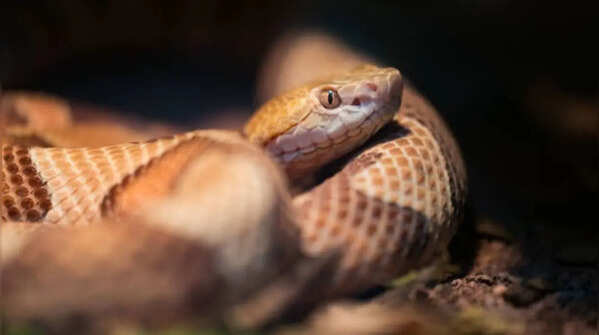
Think about the habitat of the snake
Habitat is also one of the criteria of snakes' differentiation. Water snakes spend a lot of time in or near freshwater environments, as their food consists of fish and amphibians. Copperheads usually prefer wooded hillsides, rocky outcrops, edges of forests, and places covered with leaves, but they can also be found by water. As both types of snakes have overlapping habitats, you should take into account the physical characteristics as well.
When in doubt, stay away from a snake
The most important thing is that you should not touch a snake for its identification. It is recommended even for experienced naturalists not to interact with wild animals. If you cannot differentiate copperheads from water snakes from a distance, you should stay safe and let the snake leave. If you see a snake in your house, you should contact local wildlife authorities or specialists for snake elimination.

Disclaimer:
This article is intended for general educational purposes only and should not be used to identify snakes in potentially dangerous situations. Physical characteristics can vary between individuals, and some non-venomous species closely resemble venomous ones. Never approach, handle, or attempt to identify a wild snake from close range. If you encounter a snake and are unsure of its identity, maintain a safe distance and contact local wildlife or animal control authorities if necessary.
Featured In etimes

